
Two Different Ways to Create Privacy
For an apartment facing nearby windows, privacy is a daily design issue. Blinds cover the glazing; PDLC changes the glass surface from clear to frosted. Neither is automatically best for every room. Compare the view, light control, wiring and upkeep you need before choosing for a New York home.
How Switchable Privacy Fits Daily Life
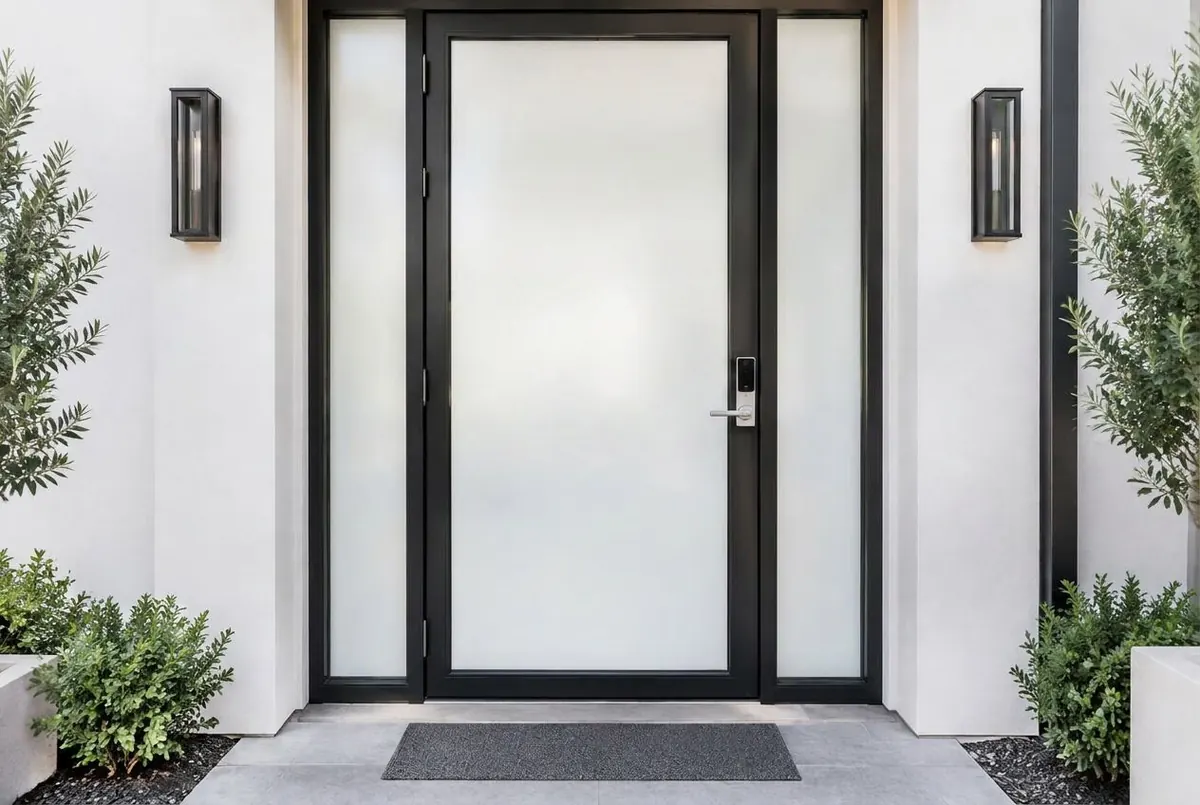
PDLC gives you a direct way to obscure a bathroom panel, home-office partition or bedroom door without moving a shade. A compatible switch or remote changes its appearance, while standard products return to frosted when power is removed. Unlike a blind with tilted slats, frosted PDLC does not retain a clear outward view.
Selected products can block up to 99% of UV rays; verify the specification for the actual film and glass combination. UV protection does not establish solar-heat rejection. Likewise, sound reduction depends on the full wall or glazing assembly, not on the presence of a privacy film.
Fitting the Glass to Your Interior
A clean switchable surface can suit a contemporary NJ condo or sit within a more traditional framed partition. Review door movement, wiring routes and moisture exposure before specifying it. For a pre-war co-op, check building requirements and alteration approvals before committing to the installation.
Wood trim, metal frames and stone finishes can all influence how the glazing looks in a room. Instead of choosing only from photographs, compare clear and frosted samples beside your actual materials. Allow for some haze in clear mode and examine sightlines from the places where people will sit or stand.
When Traditional Blinds Make More Sense
Blinds remain useful when you want adjustable slats, a familiar manual control or an option without electrical wiring. A suitable blackout treatment is also a better starting point for a dark bedroom. PDLC creates visual privacy but does not replace every shading function.
A home office used for both work and entertaining may benefit from a switchable partition, while an exterior bedroom window may still need a shade. Projection is another separate consideration: compatible frosted glass may serve as a surface with an appropriate projector, but privacy film alone is not a digital display.
Comparing Long-Term Practicalities
Smart glass removes slats and fabric from the privacy surface, but it adds electrical components and installation planning. Blinds may be simpler to replace, whereas retrofit film can be considered for suitable existing glass. For a Long Island or Manhattan home, compare the complete scope and maintenance requirements rather than assuming either option guarantees lower energy bills.